
NSF launches three new Science and Technology Centers with $90M investment in transformative research
The National Science Foundation is doubling down on the future of American innovation with a fresh 90 million dollar investment aimed at launching three new Science and Technology Centers. Spanning a five year period, this funding is designed to cement U.S. leadership in critical sectors like artificial intelligence, biotechnology, and fusion energy. According to Brian Stone, who is currently performing the duties of the NSF Director, maintaining a global edge in science requires exactly this kind of bold research and strategic partnership to turn raw innovation into tangible solutions for the public.
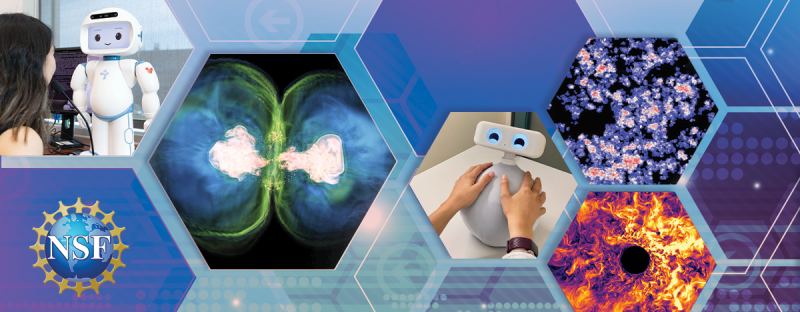
One of the standout initiatives is the Center for Transformative Explorations in Multi Physics and Engineering of Scientific Turbulence, known as TEMPEST. Led by Michigan State University, this team plans to tackle one of physics’ most stubborn mysteries: turbulence. By blending high performance computing with AI and advanced mathematical modeling, researchers hope to better predict how chaotic fluid motions behave. Success here could lead to massive breakthroughs in everything from national security technologies to the pursuit of viable fusion energy.
Meanwhile, Northwestern University will spearhead the Center for Genome Intelligence Engineering, or GENIE, focusing on the intricate architecture of our DNA. The project seeks to understand how cells lose their function over time or due to disease, specifically looking at 3D DNA organization as it relates to cancer and Alzheimer’s. If they can unlock ways to engineer this structure and restore cellular health, it could spark a revolution in biomedicine and personalized healthcare treatments.
Rounding out the group is The University of Texas at Austin’s Center for Human and Robot Co Adaptation. As robots move deeper into our homes and hospitals, this center wants to ensure humans and machines can actually work together seamlessly. Their goal is to create robots with embodied intelligence that can learn from human preferences and adapt cognitively To their surroundings, ensuring that assistive technology remains safe and genuinely useful for independent living_and healthcare settings.